VLTD vs VTS: What Is the Difference and Which Does Your Vehicle Need?
A school bus operator asks a dealer for a VTS. The RTO asks for an AIS 140 certified VLTD. A state portal asks for the device to be registered under its manufacturer. All three are talking about the same vehicle, but not always about the same thing, and the mix-up shows up at the worst moment: when a tracker that works perfectly well cannot be accepted for a public service vehicle because that model is not certified or registered.
The stakes are regulatory. Vehicle location tracking devices with one or more emergency buttons are mandatory for public service vehicles under Rule 125H of the Central Motor Vehicles Rules. The requirement was notified through G.S.R. 1095(E) dated 28 November 2016 and S.O. 5454(E) dated 25 October 2018, and the devices must meet AIS 140, the Automotive Industry Standard published by the Automotive Research Association of India (ARAI).
This article explains what each term means, how the two work together under AIS 140, and which one your vehicle actually needs.
What Is a VLTD?
VLTD stands for Vehicle Location Tracking Device. It is the AIS 140 certified hardware fitted inside the vehicle. The Puducherry Transport Department's SOP describes a VLT device as a hardware unit with a GNSS/IRNSS logger, a GPRS/3G/4G communication system and a power supply with a backup mechanism. In practice, a VLTD has three core jobs:
- Determine the vehicle's position using satellite navigation (GNSS, including India's own NavIC/IRNSS).
- Send that position and any alerts over the mobile network to a backend server.
- Keep working during power loss, thanks to its battery backup.
A VLTD is fitted together with one or more emergency (panic) buttons. Approval also happens at the model level. Puducherry enlists each device model through a separate application, and only models certified to AIS 140 by a notified test agency, with a valid type approval and Conformity of Production certificate, are eligible. Odisha likewise registers each VLT device model separately. On its own, a VLTD collects and sends data; what happens to that data depends on the system it reports to.
What Is a VTS?
VTS stands for Vehicle Tracking System. It is the full chain from the vehicle to the screen where someone acts on the data. A VTS has three parts:
- The in-vehicle device: the VLTD or other GPS tracker.
- The mobile network: GPRS/3G/4G connectivity that carries the data.
- The backend software: the servers and dashboards that show live location, generate alerts and produce reports.
VLTD vs VTS: The Core Differences
Hardware vs complete system
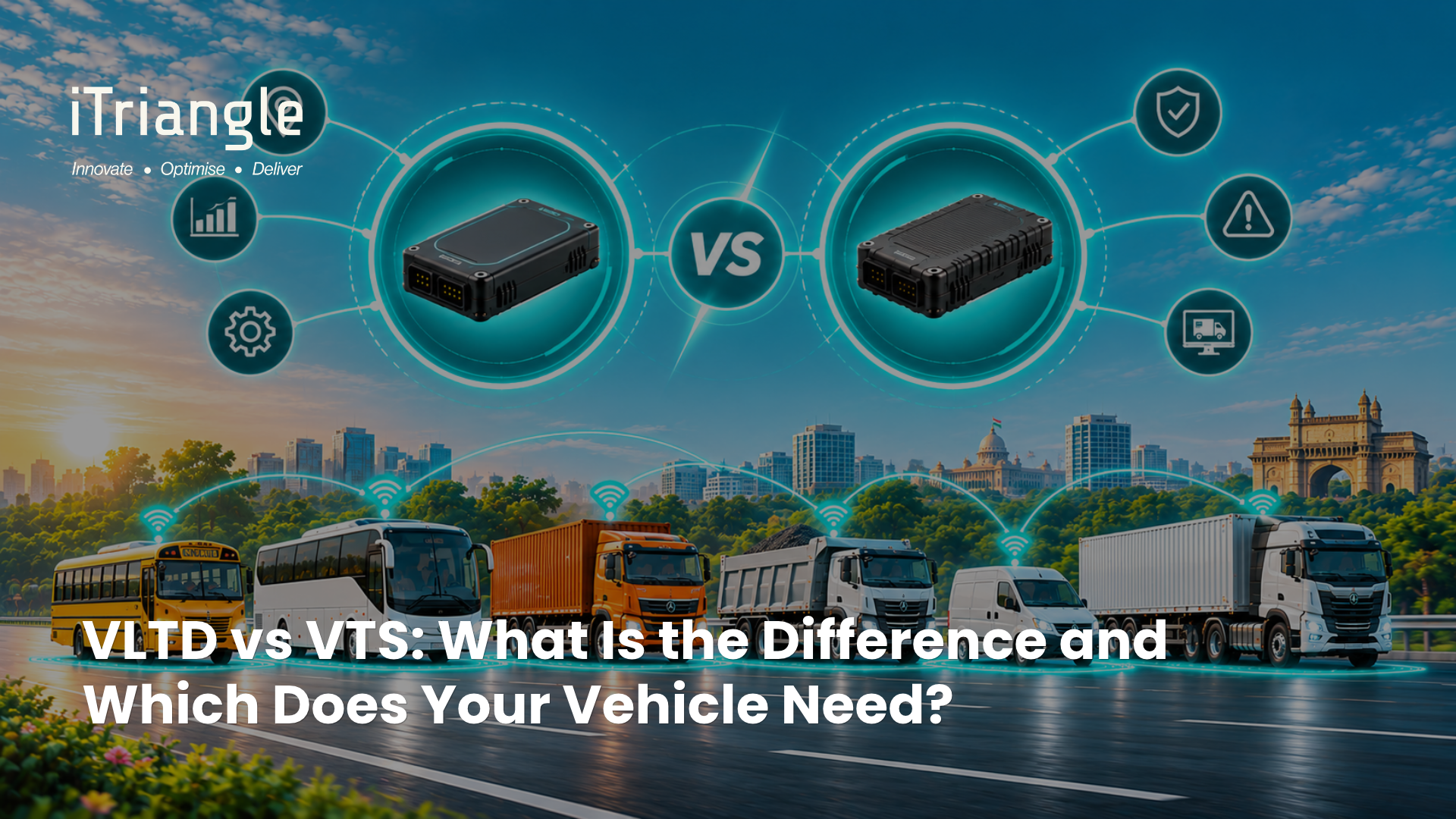
A VLTD is the physical device. A VTS is the device plus the connectivity and software that interpret its data.
Where each one sits
The VLTD sits in the vehicle. The VTS backend sits on servers, and states set rules for it too: Puducherry's SOP states that no data or copies of it should be hosted outside India, and Odisha requires the data to be kept on servers located in India only.
What each one is certified for
The VLTD model must be certified to AIS 140 by an approved testing agency, and manufacturers register each model with the state. Backend requirements are set by each state, so they can differ from one state to another.
Who uses each one
The VLTD is installed by a fitment dealer, and its panic button is used by drivers and passengers. The VTS backend is used by fleet managers for daily operations and, for compliance, by state authorities.
Quick comparison between VLTD and VTS
| VLTD (device) | VTS (complete system) |
|---|
| What it is | AIS 140 certified hardware fitted in the vehicle | Device + mobile network + backend software |
| Where it sits | Inside the vehicle | Vehicle, network and servers |
| Certification | Each model AIS 140 certified and registered with the state | Backend rules set by each state |
| Main users | Fitment dealers, drivers, passengers (panic button) | Fleet managers, transport departments |
Which Does Your Vehicle Need?
Public service vehicles: a certified VLTD connected to the approved backend
Public service vehicles must carry a VLT device with emergency buttons. Two-wheelers, e-rickshaws, three-wheelers and transport vehicles that do not need a permit are excluded. States can go further: Puducherry's SOP also covers national permit vehicles and goods vehicles carrying oxygen. Check your state transport department's current requirements before buying.
Private fleets not covered by the mandate: a VTS built for operations
Goods carriers, mining tippers and company-owned vehicles outside the mandate do not need a certified VLTD. What they need from a VTS is operational: knowing where vehicles are, catching fuel loss with a fuel sensor, and spotting harsh driving through motion sensors. Bharat101 Plus 4G, for example, pairs its AIS 140 certification with fuel sensor support and an accelerometer and gyroscope for driver behaviour analysis.
Fleets that need both
Many fleets run public service vehicles alongside private ones. In that case, one AIS 140 certified device can meet compliance and feed the fleet's own tracking platform, so there is no need for two devices on the same vehicle.
A quick checklist
- Is the vehicle a public service vehicle under the Central Motor Vehicles Rules? If yes, it needs a certified VLTD with emergency buttons.
- Do you need more than location, such as fuel, driver behaviour or engine data? If yes, choose a device and platform that support it.
- Does your state have its own backend or registration rules? Confirm with your device provider and the state transport department.
Why This Matters Now
Approval is decided model by model and state by state. A device can be AIS 140 certified and still need to be enlisted with a particular state before it is accepted there; Puducherry and Odisha, for example, each register device models separately and connect them to their own state monitoring backend. For a fleet running vehicles across several states, the questions to ask a supplier are therefore specific: is this exact model certified, is the manufacturer registered or empanelled in each state I operate in, and does the device work with that state's backend? Getting this right once avoids refitting devices later.
How iTriangle Helps: One Device for Compliance and Fleet Tracking
iTriangle has designed and manufactured telematics devices in India since 2009, with more than one million devices deployed. It is now empanelled across most of the states in India, which matters directly for state-by-state VLTD approval. Its AIS 140 range covers both sides of the VLTD vs VTS question:
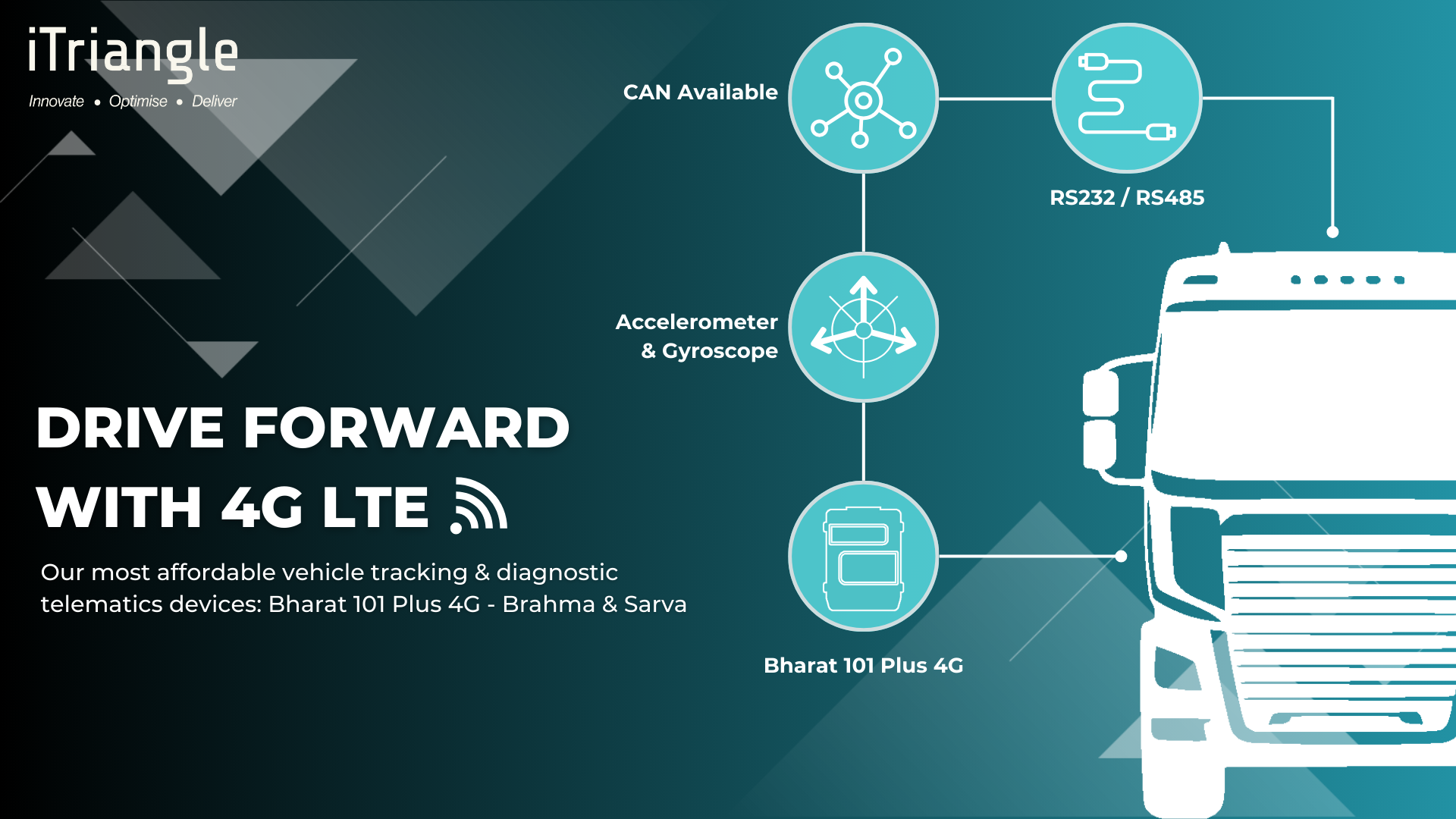
- Bharat101 Plus 4G: AIS 140 certified, with LTE Cat 1 and 2G, GNSS support for GPS, Galileo, NavIC and BeiDou, an IP65-rated build, an accelerometer and gyroscope for driver behaviour, a battery removal alert for tamper protection, RS232/RS485 interfaces and remote configuration via SMS or USB. It supports panic button and fuel sensor accessories.
- Bharat101 with IRNSS: a 2G, AIS 140 compliant device with built-in IRNSS, an accelerometer and gyroscope, a main battery removal alert, an RS232 port and an IP67-rated rugged design.
- UX101-AL: a 4G LTE, AIS 140 certified device with dual CAN and RS232, DM1/UDC fault code capture, storage for up to 1,00,000 records, VFOTA and an IP67 enclosure, for advanced fleets and vehicle manufacturers.
- aQuila Mobility Solution: iTriangle's cloud-based mobility platform for vehicle manufacturers (ICE and EV) and enterprise clients, covering fleet management, transport management, logistics and vehicle firmware over the air, with telematics hardware, middleware and the platform supplied together.
For background on the mandate itself, see iTriangle's guide: AIS 140 GPS Tracker for Commercial Vehicles: Why It Is Mandatory in India.
Conclusion
VLTD and VTS are not competing options. A VLTD is the certified device in the vehicle; a VTS is the complete system around it. For public service vehicles, both have to line up: a certified model, registered in your state, reporting to a backend the transport department can access. For vehicles outside the mandate, the same device can simply report to your own fleet platform. Choosing one certified device that does both avoids fitting two boxes in one vehicle.
If you are planning AIS 140 compliance or upgrading your fleet tracking, talk to iTriangle's team about the right certified device for your vehicles.