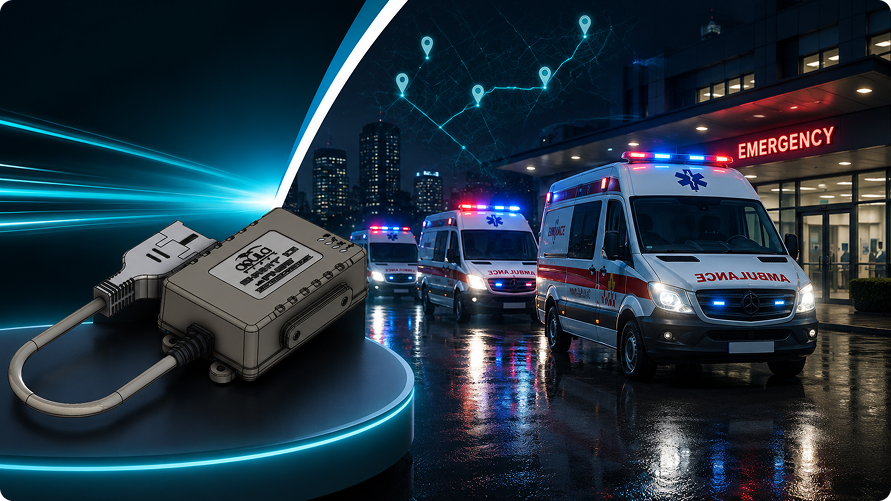
Optimizing Ambulance Services with Telematics Solutions
Overview
Emergency medical service (EMS) providers around the world face increasing pressure to deliver faster, safer and more coordinated emergency response. Managing large ambulance fleets across urban centers, highways and remote regions requires real-time visibility, accurate location tracking and efficient dispatching.
This case study highlights how an emergency ambulance fleet in India enhanced its operations by deploying advanced telematics solutions, improving response times, fleet utilization and overall service reliability. The deployment demonstrates how connected vehicle technologies can transform emergency response operations in any region.
The Challenge
Like many emergency service providers worldwide, the ambulance network faced several operational challenges:
- Limited real-time visibility of ambulance locations.
- Difficulty predicting estimated time of arrival (ETAs)
- Lack of insights into driving behavior and fleet utilization
- Challenges in dispatching the nearest available ambulance during emergencies.
These limitations affected response times, operational efficiency and resource allocation during critical medical situations.
The Solution
A comprehensive telematics solution was deployed to enhance fleet visibility and control. This included installing AIS 140-certified tracking devices equipped with IRNSS (Indian Regional Navigation Satellite System) in the Indian market for accurate and reliable location tracking. These rugged devices enabled:
- Real-time GPS vehicle tracking for continuous ambulance monitoring
- Predictive ETA insights, allowing hospitals to prepare before patient arrival
- Driver behavior monitoring for assigning the nearest and safest ambulance
- Centralized fleet monitoring for improved coordination and operational control
The deployment also included intuitive dashboards, user training and ongoing technical support to ensure smooth adoption across the organization.
Overcoming Implementation Barriers
As with many digital transformation projects, the implementation involved integrating new technology with existing operational workflows and legacy systems.
The Outcome
The telematics implementation delivered measurable operational improvements, including:
- Faster response times to critical situations
- Improved fleet utilization through intelligent ambulance dispatch
- Better operational visibility and centralized fleet management
- Increased public satisfaction through more reliable emergency services
Why AIS 140 Certification Matters?
This deployment utilized AIS-140 certified telematics devices to comply with India’s intelligent transportation regulations for emergency and public services vehicles.
AIS 140 provides features such as:
- Real-time vehicle tracking
- Emergency alert (panic button) functionality
- Secure and reliable data communication
While AIS 140 is an India-specific regulatory standard, the underlying capabilities include real-time tracking, emergency communication and secure fleet monitoring to reflect global best practices for emergency fleet management and intelligent transportation systems.
Why Choose iTriangle?
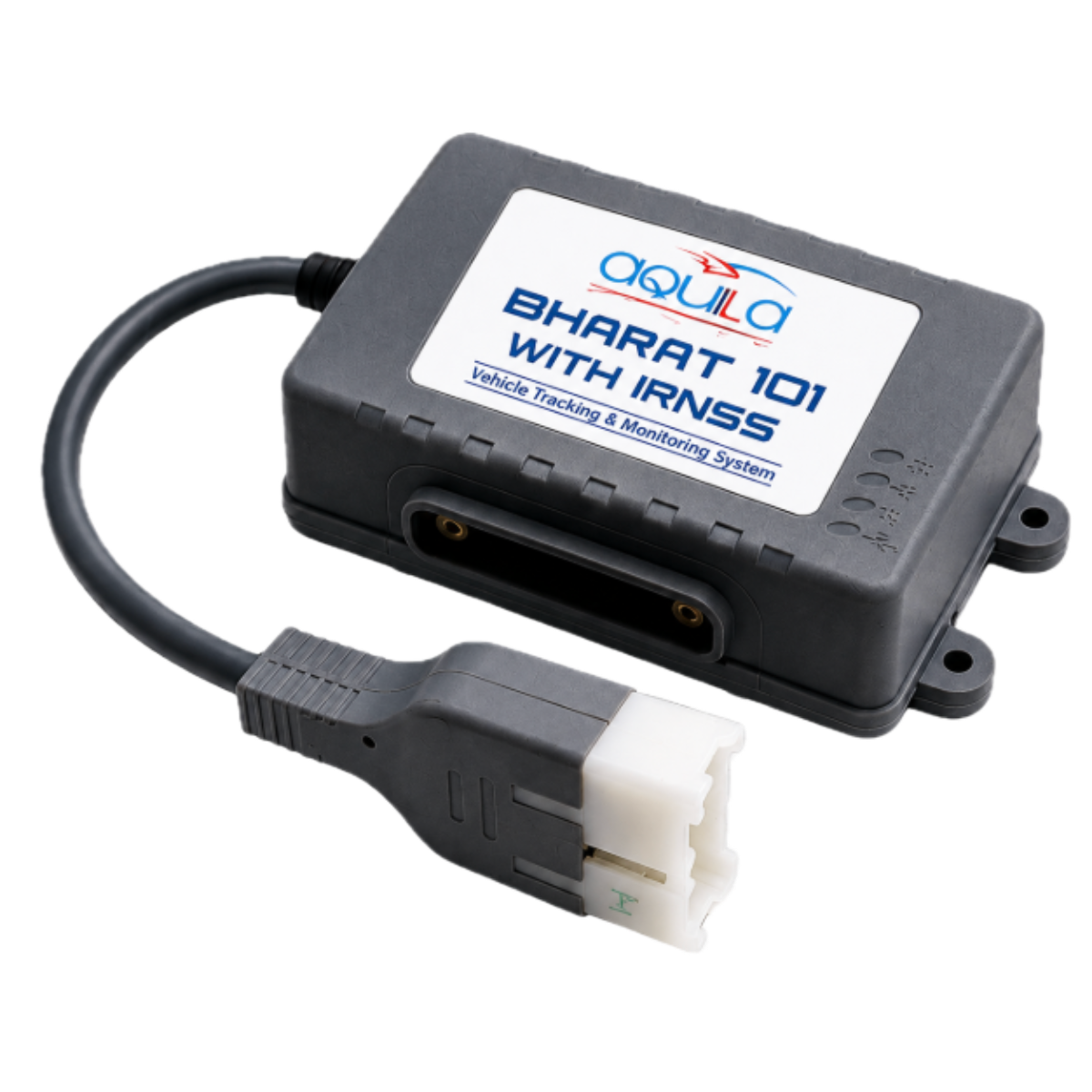
The BHARAT101 with IRNSS is a 2G, rugged, AIS 140-certified telematics device powered by IRNSS and GPS for precise real-time tracking. Built for India’s public and emergency vehicle needs, it ensures high accuracy, faster response, and seamless command center integration.
With IP65 protection, panic button support, and encrypted data transmission, BHARAT101 delivers reliable performance even in tough conditions. Its smart diagnostics and driver behavior insights reduce downtime, improve fleet efficiency and enhance seamless integration with fleet management and command-and-control platforms.
With more than 16+ years of telematics expertise, iTriangle delivers scalable connected mobility solutions trusted by government agencies, emergency service providers, OEM’s and fleet operators worldwide.
Featured Products
BHARAT101 WITH IRNSS
Applicable Markets:
🇮🇳 India
In Partnership With: